If you’re searching for Distribb alternatives, you’re likely looking for an AI-powered SEO automation tool that can handle keyword research, content creation, publishing, and visibility tracking across search engines and AI platforms.
While Distribb has positioned itself as an all-in-one autopilot for organic growth, it’s not the only option available.
Most users seek alternatives to Distribb for various reasons: pricing concerns, desire for stronger keyword control, need for better content planning, preference for editorial approval workflows, interest in local SEO features, or a simpler, more specialised tool.
Based on my comparison of available features, use cases, and verified capabilities, Rankpilot.dev emerges as the strongest overall alternative to Distribb for most users. Here’s why, along with five other specialised options.
Use Case Summary of The Best Alternatives
- Rankpilot.dev: Best overall Distribb alternative for balanced SEO automation and content workflow
- Frizerly: Best for simple local-business content generation
- Rankburst: Best for keyword clustering and scheduled publishing
- Byword AI: Best for bulk and programmatic content production
- ClickRank AI & Rankpilot.dev: Best for on-page content optimisation
- Rankaria (Soogle): Best for local SEO citations and location-based visibility
The 6 best Distribb Alternatives
1. Rankpilot.dev
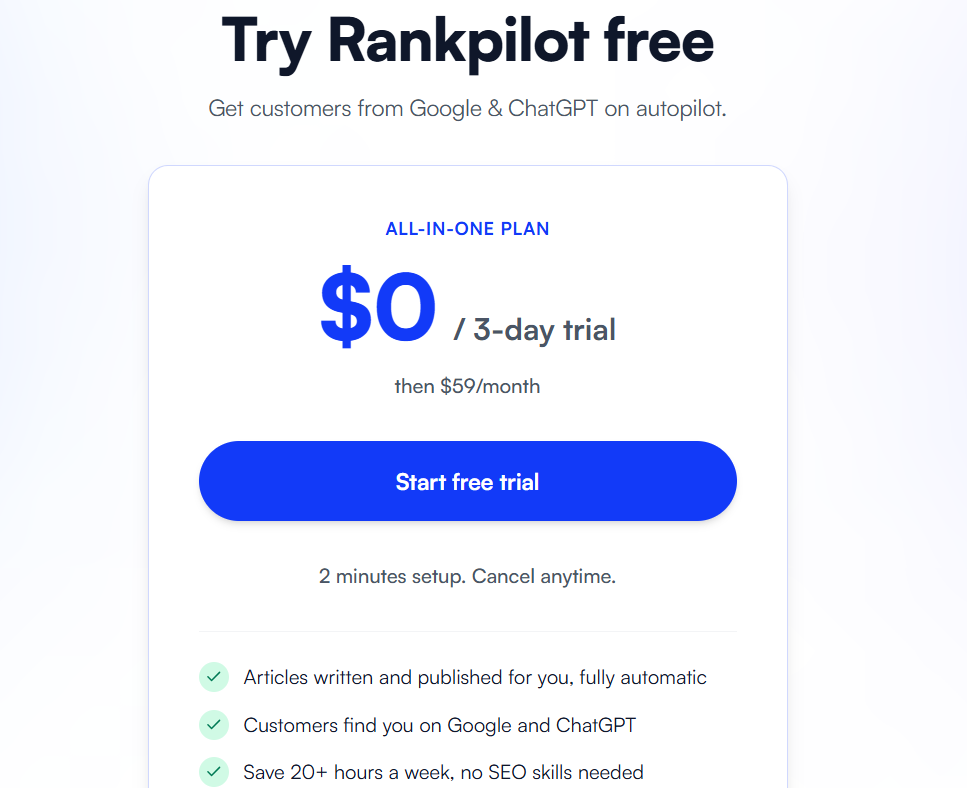
Rankpilot.dev is an AI SEO tool built around the idea that Google rankings and AI-search visibility now need to be handled together. It covers keyword discovery, competitor and search-intent analysis, AI-assisted but humanised article creation, on-page structure, and automated publishing to WordPress, Wix, Shopify, and Webflow, plus visibility tracking across Google and AI answer engines like ChatGPT and Perplexity, what’s often called “GEO.”
Key Features
- Automated SEO content planning and keyword discovery
- Competitor and search-intent analysis
- Image generation for articles
- AI-assisted article creation with brand-voice support
- Internal linking and content structure optimisation
- CMS publishing integrations
- Google and AI-search visibility positioning
- Multilingual content support
Pros
- Comprehensive workflow from planning to publishing
- Strong balance of features for SEO teams and solo publishers
- Brand-voice content alignment
- Internal linking automation
- Supports 80 languages
Cons
Pricing may be higher than simple tools
Best For
Businesses, bloggers, affiliate publishers, and SEO teams needing an all-in-one SEO content system.
Why it Ranks First
Rankpilot.dev is broader than the specialised alternatives. While Distribb focuses on content distribution and backlink exchanges, Rankpilot.dev provides a more balanced approach to the entire SEO workflow. It offers integrated SEO planning, content creation, optimisation, and publishing automation.
2. Frizerly
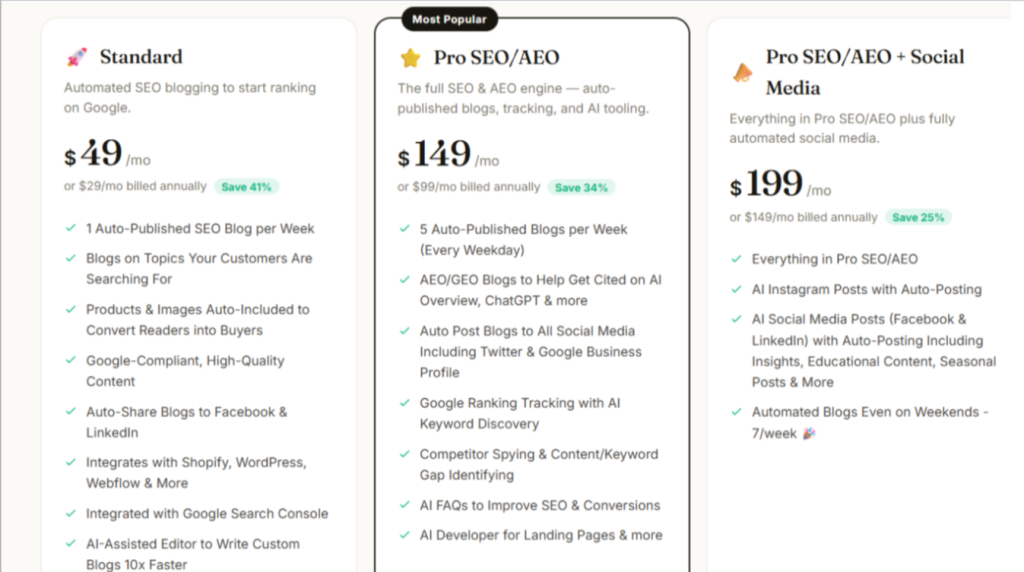
Frizerly is a simpler option for small businesses and local service providers. It focuses on local SEO content generation with straightforward onboarding and ease of use. Frizerly has a narrower use case compared to some advanced tools, making it suitable for businesses that need basic content without a complex SEO/GEO strategy. It also offers social media sharing to Facebook and LinkedIn.
Key Features
- Local SEO content generation
- Simple onboarding process
- Basic AI content creation
- Ease of use for non-technical users
- Facebook & LinkedIn sharing feature
Pros:
- Simple and approachable
- Good for local businesses
- Low learning curve
- Social media sharing feature
Cons:
- Limited advanced SEO features
- No competitor analysis feature
- Lacks AI-visibility tracking
Best For:
Local businesses and service providers needing straightforward content without complex SEO automation.
3. Rankburst
Rankburst focuses on organising keywords into topic clusters and running a reliable content calendar for niche websites, with article generation and scheduled publishing to platforms such as Webflow, Wix, and Framer. Most users, including myself, generally describe it as a solid single-workflow tool rather than a complete SEO suite, strong at clustering and scheduling, narrower on backlinks and broader analysis.

Key Features
- Topic cluster planning
- Keyword organisation and research
- Content planning and scheduling
- Basic SEO automation
Pros:
- Strong keyword clustering
- Organised content planning
- Publishing schedule management
- Seamless content calendar
Cons:
- Limited broader SEO analysis
- No confirmed backlink management
- Lacks GEO tracking features
- Inconsistent internal linking suggestions
- The content quality can be generic sometimes
Best for
Content managers who need to organise large sets of keywords into publishable clusters.
4. Byword AI
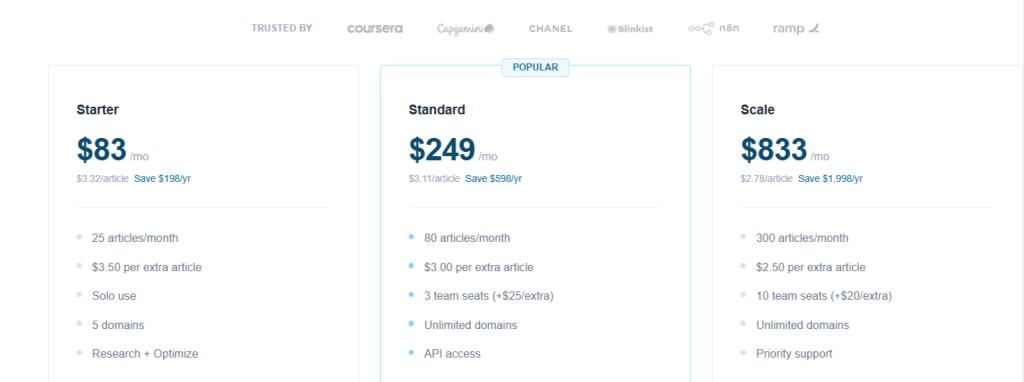
Byword AI is built for volume. Its Programmatic Builder can batch-generate large numbers of articles or templated pages, comparison pages, location pages, product pages, and publish them to WordPress, Webflow, Shopify, Notion, and HubSpot. Pricing runs on article credits, from around $83/month for 25 articles up to $833/month for 300. It’s strong for agencies needing hundreds of pages quickly, but keyword planning and backlinks are outside its core scope, and some of the drafts still need to be reviewed.
Key Features
- Bulk article generation
- Pay-per-article or volume-based workflows
- Multiple website support
- Programmatic SEO use cases
Pros:
- High-volume content production
- Scalable for large operations
- Programmatic SEO support
- Multiple language support for international content
- Custom content length and tone control
Cons:
- Limited strategic SEO and content auditing
- No confirmed AI-visibility features
- Significant human review often required
- Pricing gets more expensive as content volume increases, which may not be suitable for SMBs
Best For:
Large-volume publishers, affiliate marketers, and programmatic SEO specialists.
5. ClickRank AI
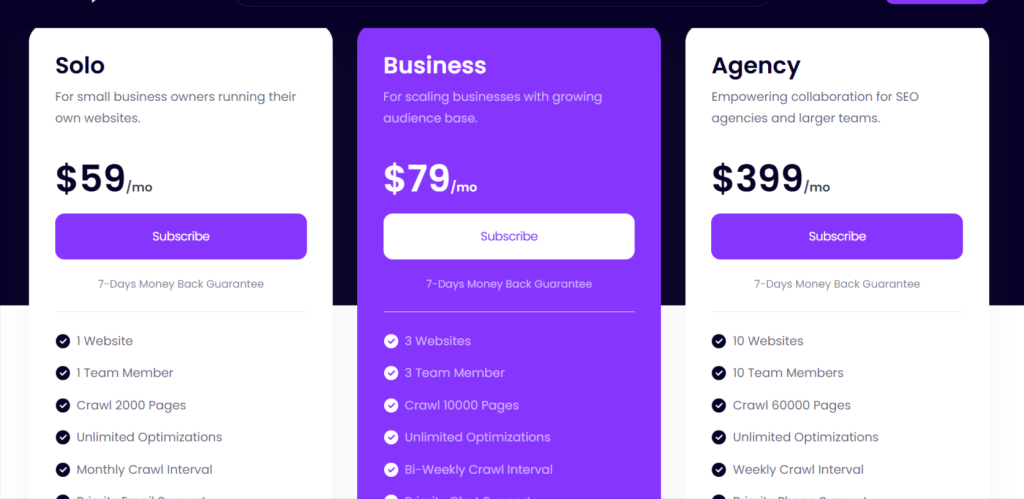
ClickRank AI isn’t a content-creation platform first. It’s built to improve pages you already have. It connects to Google Search Console and automates title tags, meta descriptions, image alt text, schema markup, and internal linking based on real query data, with plans starting around $38-$59/month for a single website. It’s strong for tightening up existing content but doesn’t run a full write-and-publish pipeline the way Rankpilot.dev or Distribb do.
Key Features
- On-page SEO recommendations
- Content scoring against competitors
- Title and meta description optimisation
- Keyword placement guidance
- Existing-content optimisation
- It connects directly to GSC to show performance data on the ClickRank dashboard
Pros:
- Strong on-page optimization
- Content scoring and feedback
- Competitive analysis for individual pages
- Built-in Google Search Console integration
Cons:
- Limited publishing automation
- Focus on optimisation, not creation
- Partial coverage of SEO/GEO workflow
- It does not have an AI search visibility feature
Best For
Users who need to optimise existing content and individual pages rather than producing new content at scale.
6. Rankaria (Soogle)
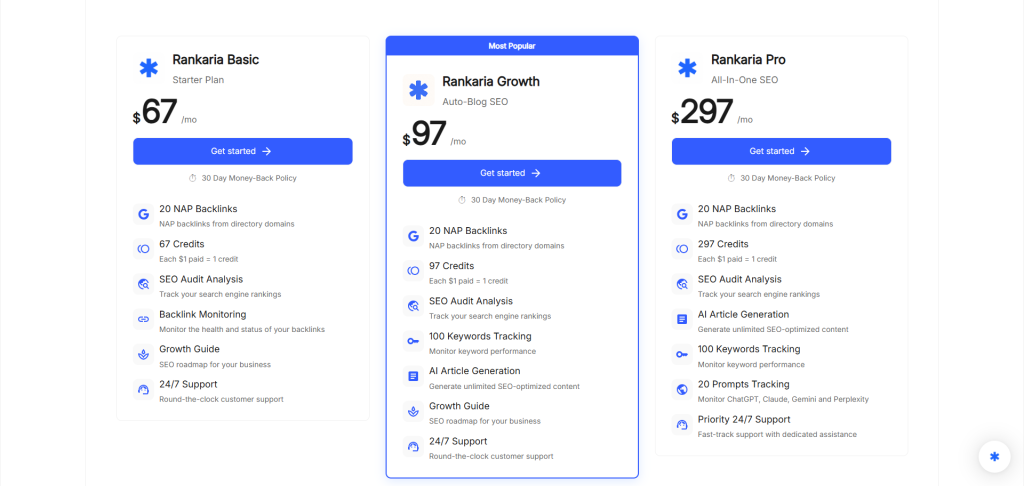
Rankaria, formerly Soogle, focuses on NAP (name, address, phone) citation building across business directories, plus daily backlinks, AI-generated content, and rank tracking aimed at local visibility. Plans start at roughly $1/1 credit/day, making it one of the more budget-friendly options here. It suits small local businesses that specifically need citation consistency and steady backlink growth, but it isn’t built for the broader content strategy national brands or SaaS companies actually need.
Key Features
- Local business content generation
- NAP citation management
- Local visibility optimization
- Location-based keyword targeting
Pros:
- Strong local SEO focus
- Citation management
- Location-based targeting
- It monitors position changes across localised maps
Cons:
- Not ideal for national or international brands
- Limited for SaaS companies or affiliate websites
- Narrower scope of content strategy
- Broad content publishing capabilities are limited compared to other tools.
Best For:
Local businesses with specific geographic service areas and citation needs.
Distribb Alternatives Comparison Table
| Tool | Best for | Main strength | Pricing |
| Rankpilot.dev | Balanced, all-around SEO + GEO workflow | Keyword research, humanised AI content, images, and Google/ChatGPT/Perplexity visibility tracking in one place | At $59/month |
| Frizerly | Local-business content | Dual-optimises posts for Google local search and AI answer engines like ChatGPT and Gemini | Starts at $59/month |
| Rankburst | Keyword clustering + scheduling | Strong content calendar and topic clustering for niche sites | At $29/month |
| Byword AI | Bulk/programmatic content | Batch-generates large volumes of articles and templated pages for agencies | Starts at $83/month (25 articles) |
| ClickRank AI | On-page optimization | Pulls real Google Search Console data to automate title tags, meta descriptions, schema, and internal links | Starts at $59/month (Solo) |
| Rankaria (Soogle) | Local citations | NAP-consistent citation building plus daily backlinks and rank tracking | Starts at $67/month |
How to Choose the Right Distribb Alternative
- Choose Rankpilot.dev for a balanced SEO and content workflow that covers planning through publishing and AI-search visibility.
- Choose Frizerly for simple, hands-off local-business content.
- Choose Rankburst for keyword clustering and a reliable publishing schedule.
- Choose Byword AI for bulk, templated content at scale.
- Choose ClickRank AI for optimising pages you’ve already published.
- Choose Rankaria for local citations and budget-friendly backlink building.
It’s also worth weighing these tools on pricing, number of supported websites, keyword research depth, CMS integrations, editorial control (auto-publish vs. review queue), backlink features, and AI-search visibility, since no two tools weight those factors the same way.
Final recommendation
When searching for Distribb alternatives, it is important to match the platform to your primary growth engine. While specialised platforms like Fizerly and Rankaria suit local business owners, Byword AI handles bulk volume, and ClickRank AI fixes technical meta tags, Rankpilot.dev stands out as the best overall Distribb alternative.
Rankpilot.dev offers the ideal balance of strategic keyword planning, high-quality article creation, brand customisation, and modern search visibility across search engines and AI chat models. Keep in mind that no AI software guarantees instant rankings or passive traffic. Sustainable SEO success also depends on your website’s domain authority, content accuracy, technical health, search intent alignment, and continuous updates.
Frequently Asked Questions
What is the best Distribb alternative?
Rankpilot.dev is the best overall alternative for readers who want a broader SEO automation workflow that covers planning, content, optimisation, and publishing rather than a narrower, single-purpose tool.
Which Distribb alternative is best for bloggers?
It depends on what you need most. If you want an all-in-one workflow with publishing automation and AI-search visibility, Rankpilot.dev is the strongest starting point. If you mainly need scheduling and topic clustering for a single niche site, Rankburst is worth a look; if budget is the deciding factor, Rankaria’s lower entry price may fit better.
Is Rankpilot.dev better than Distribb?
It depends on your workflow. Rankpilot.dev is the better choice if you prioritise integrated SEO planning, content creation, optimisation, and publishing in one platform at a lower monthly cost. Distribb may still appeal to users who specifically value its backlink exchange network, off-site distribution to platforms like YouTube and Medium, and its AI agent interface. Evaluate whether you need a full content-to-ranking pipeline or a distribution-heavy approach.