Rankpill is a $99/month autopilot SEO tool that automatically publishes daily articles to your CMS. No matter how good an SEO tool it is, users still search for Rankpill alternatives that offer more flexibility.
Users mostly leave Rankpill because they need scalable multilingual content, more control over editorial review, or a less rigid daily publishing cadence. Based on my hands-on testing, here are the 6 best Rankpill alternatives ranked by use case, with Rankpilot.dev taking the top spot as the best overall replacement.
Use Case Summary of The Best Alternatives
- Best Overall Rankpill Alternative: Rankpilot.dev (Complete automated multi-CMS content engine optimised for Google and ChatGPT visibility)
- Best for Reviewable Draft Workflows: Arvow and Rankpilot.dev (Structured editorial approval queue before CMS publishing)
- Best Budget Alternative for GEO Visibility: Contentpen (Affordable entry-level platform focused on AI search citations)
- Best for Automated Long-Form Blogging: RankPine and Rankpilot.dev (Hands-off long-form article creation and performance monitoring)
- Best for Enterprise Content Auditing: MarketMuse (Deep topical authority scoring and SERP gap analysis)
- Best for Lightweight AI Drafting: GrowthBar (Simple AI writing assistant with built-in keyword tracking)
The 6 Best Rankpill Alternatives
1. Rankpilot.dev
What separates Rankpill from Rankpilot.dev in my comparison is flexibility. Rankpilot.dev supports content generation in more than 80 languages and is built to target visibility on both Google search and conversational engines like ChatGPT, rather than treating AI-search visibility as an afterthought.
It starts with autonomous query discovery, finding the keywords worth targeting based on your niche and competitors; then moves into structured article generation with on-page formatting, internal links, and images built in, before publishing directly to WordPress, Shopify, or Wix, with options to review or go ahead and publish.
Its flat plan is priced well under Rankpill’s flat $99/month tier, and agency plans scale up with white-label reporting and AI-visibility tracking for teams managing multiple client websites.

Key Features
- Autonomous query/keyword research based on niche and competitor research
- Direct hands-off publishing to WordPress, Shopify, and Wix
- Support for 80+ languages
- Dual targeting for Google search and AI answer engines like ChatGPT
- Contextual article generation with built-in on-page formatting, internal linking, and image integration
Pros
- Lower entry price than Rankpill’s flat $99/month plan
- Broader language support for teams scaling into new markets
- Publishing flexibility across multiple CMS platforms instead of one
- Optimised for both traditional SEO and emerging AI search
- Hands-off publishing workflow reduces operational overhead
Cons
- Pricing may be higher than simple tools, including some Rankpill alternatives
Best For
Founders, marketers, and agencies who want Rankpill’s hands-off publishing model with more languages, more CMS options, and more pricing flexibility.
2. Arvow
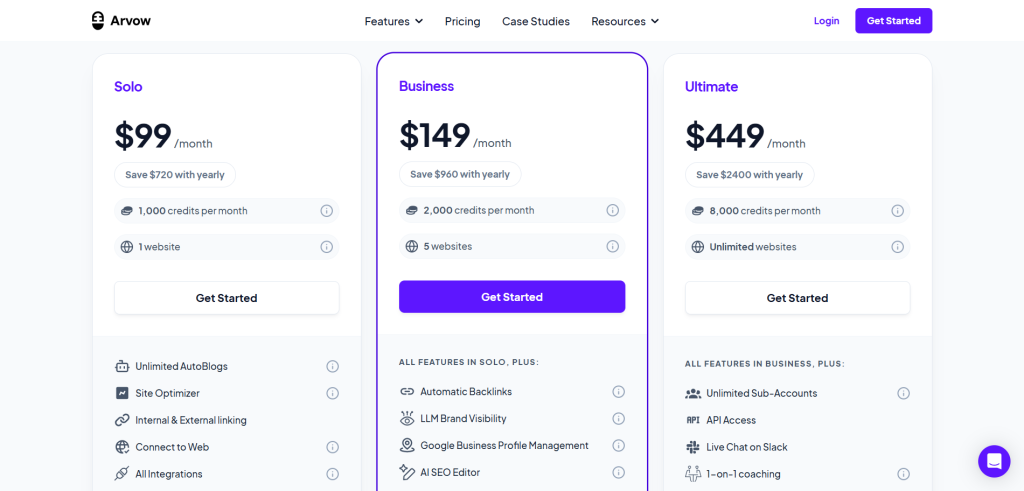
Arvow fills a specific gap that Rankpill users often complain about: the lack of editorial review before articles go live. Arvow’s review-first publishing queue gives you complete control. In my evaluation, the AI draft editor generated solid content that I could review, edit, and approve before scheduling publication.
The platform syncs with your CMS and offers flexible scheduled publishing options. This workflow is ideal for writers who want AI assistance but refuse to sacrifice editorial quality control. The main tradeoff I noticed is that its feature set is smaller in scope than full enterprise autopilot suites, with some features reserved for higher-tier plans.
Key Features
- Draft-and-approve review queue before publishing
- AI SEO Agents that generate structured articles with links and images
- Autoblog scheduling for hands-off publishing when desired
- CMS sync with WordPress, Shopify, and Webflow
- Multilingual content generation
Pros
- The Editorial review step reduces the risk of unchecked content going live
- Flexible between fully automated and manually approved publishing
- Wide CMS coverage for multi-platform teams
Cons
- Content quality is inconsistent because some articles are unusable
- Key automation features locked behind higher-tier plans
- Smaller overall feature set than full-scale enterprise autopilots
Best For
Content managers and editorial teams who want AI-assisted output but require mandatory human review stages before articles are published.
3. Contentpen
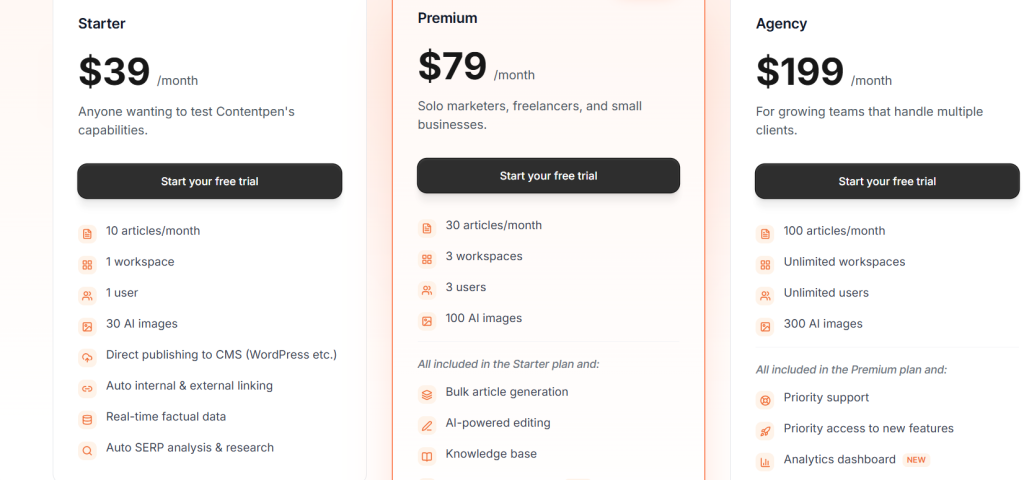
Contentpen is built around keeping AI-search visibility affordable rather than bundling it into an expensive enterprise tier. It shows live SEO and GEO scores as you write, so you can see how a draft is likely to perform in both Google rankings and AI-generated answers before it’s published, and it automates internal and external linking as part of the draft.
The platform generates decent content quickly, but I found it offers narrower CMS integrations compared to top-tier platforms. It’s a budget-friendly entry point for GEO experimentation, not a comprehensive replacement for established SEO workflows.
Key Features
- Live SEO and GEO scoring shown during drafting
- Keyword research and SERP/competitor gap analysis
- Automated internal and external linking
- One-click WordPress publishing
- AI visibility tracking across multiple AI platforms
Pros
- Lower entry price than Rankpill’s flat monthly rate
- GEO scoring built directly into the writing process, not bolted on
- Post-publish opportunity tracking to flag underperforming articles
Cons
- Limited native CMS auto-publishing options. Hence, it requires manual copy-pasting for some setups.
- Basic workflow features compared to full-scale publishing suites.
- CMS integrations are narrower than multi-platform competitors
Best For
Budget-conscious creators and small teams who want GEO visibility features without an enterprise price tag.
4. RankPine
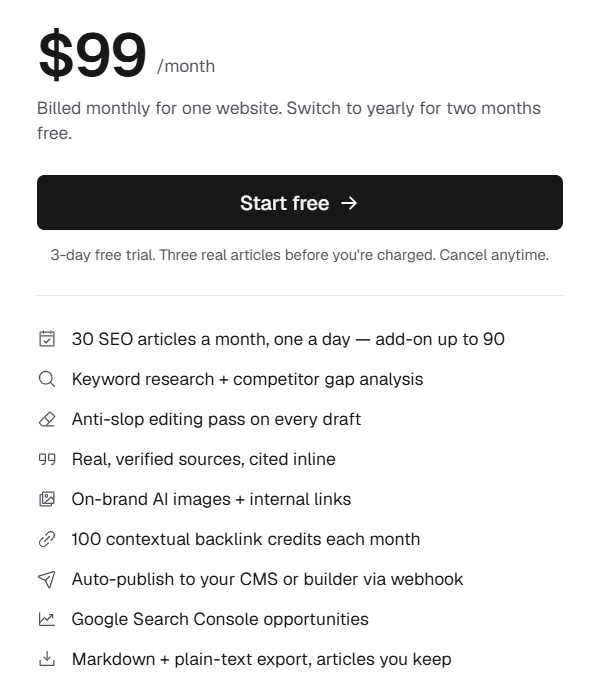
RankPine handles what it advertises: automated long-form blog posting. In my experience, the platform excels at generating lengthy articles and pushing them directly to your CMS. The integrated website-level monitoring provides at-a-glance performance metrics so you can track how your content is performing.
Where RankPine falls short is deep multilingual coverage; it works well for English-focused content but doesn’t support the breadth of languages that Rankpilot.dev offers. Similarly, custom agency workflows are limited, making it better suited for individual website owners rather than agencies managing multiple client accounts. For hands-off long-form automation, however, RankPine delivers on its core promise.
Key Features
- On-brand image generation matched to site style
- Automated long-form article generation
- Direct publishing to multiple CMS
- Automated keyword research and competitor gap analysis
- Built-in credit-based backlinks feature
- Website-level performance tracking integrated with Google Search Console to monitor clicks and impressions.
Pros
- A true hands-off experience from keyword research to publishing.
- Generates high-quality, well-researched articles, not generic AI content.
- Automated backlink building is a significant value-add.
- Wide range of CMS and platform integrations.
Cons
- Centred on one core workflow rather than a broader feature suite
- The content often requires review and editing
- Lacks deep multilingual coverage compared to platforms like Rankpilot.dev.
Best For
Solo founders and lean marketing teams who want Rankpill’s daily-publish model with more flexible per-site and agency pricing
5. MarketMuse
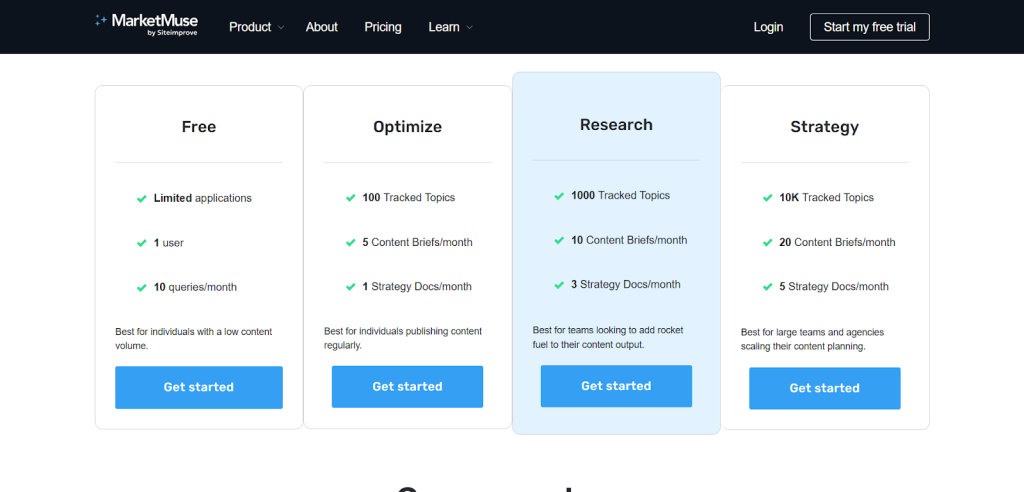
MarketMuse operates in a completely different category than most Rankpill alternatives. Instead of focusing on automated publishing, MarketMuse provides enterprise-grade content strategy analysis. Its patented topical authority scoring helps you identify content gaps and build comprehensive content inventories that dominate search results.
The platform’s SERP competitor gap mapping shows you what your competitors are ranking for and where your content falls short. However, MarketMuse lacks hands-off auto-publishing entirely. It’s an analysis and strategy tool, not a content generation and publishing engine. The high price point reflects its enterprise focus, making it unsuitable for small businesses or budget-conscious businesses.
Key Features
- Patented topical authority scoring to assess content comprehensiveness
- Content inventory analysis identifying gaps and opportunities
- SERP competitor gap mapping for competitive intelligence
- Brief builder for structured content creation guidance
Pros
- Unmatched content strategy and audit capabilities
- Data-driven insights for building topical authority
- Strong competitive intelligence features
- Enterprise-grade support and documentation
Cons
- Premium pricing not suitable for smaller operations
- No hands-off auto-publishing capabilities
- Requires strategic expertise to fully leverage
Best For
Enterprise content teams and agencies building comprehensive topical authority strategies with dedicated strategy resources.
6. GrowthBar
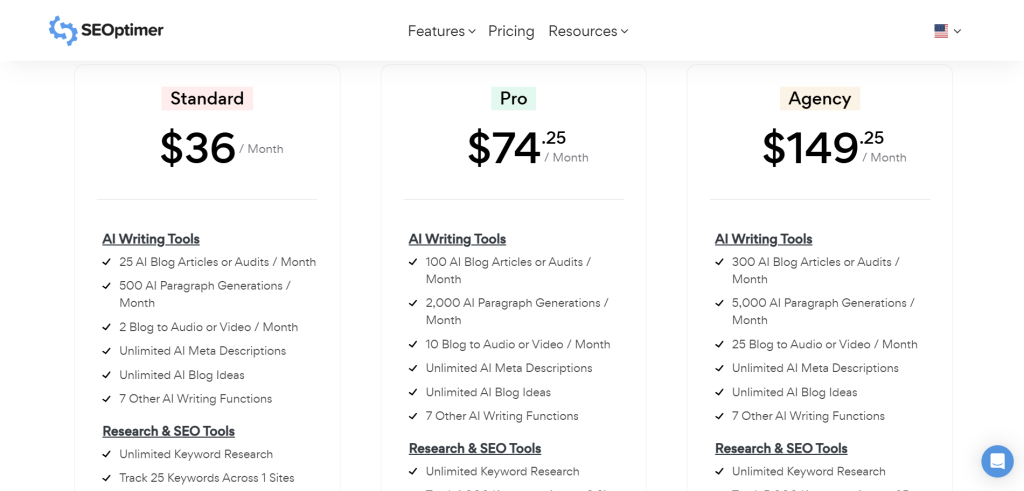
GrowthBar is a lightweight assistant built for people who still want to write manually but want AI and SEO data close at hand. Its 2-Minute Blog Builder generates outlines and drafts quickly, and a Chrome extension surfaces keyword and competitor data while you browse or write, without requiring a full platform switch.
Where GrowthBar differs most from Rankpill and the other tools here is scope: it includes a built-in rank tracker and on-page SEO suggestions, but there’s no multi-website autopilot pipeline or scheduled daily publishing. It’s built for a single writer or small blog managing content by hand, not a hands-off content operation.
Key Features
- 2-Minute Blog Builder for quick AI-assisted drafts
- Built-in keyword rank tracker
- Chrome extension for on-page SEO checks
- On-page SEO suggestions during writing
Pros
- Simple, low-friction interface for solo bloggers
- Rank tracking included without a separate tool
- Chrome extension useful for quick research outside the platform
Cons
- No autopilot publishing or scheduling across sites
- Manual drafting focus means more hands-on time than Rankpill’s automated flow
- Offers limited advanced features for broad AI search optimisation (GEO).
Best For
Solo bloggers who want lightweight AI writing help and keyword tracking without a full autopilot system.
Comparison Table of Rankpill Alternatives
| Tool | Primary Use Case | Key Strength | Key Limitation | Starting Pricing |
| Rankpilot.dev | End-to-end SEO content automation | Query/keyword research, article writing, and multi-CMS publishing in one hands-off flow, in 80+ languages | Agency-tier AI visibility tracking is still rolling out | At $59/month |
| Arvow | Review-first content automation | Draft-and-approve queue before anything auto-publishes | AI SEO editing tools are locked to the higher plan | Starts at $99/month |
| Contentpen | Budget GEO-focused blogging | Live SEO and GEO scoring shown while you write | Entry tier caps you at 10 articles/month | Starts at $39/month |
| RankPine | Hands-off long-form autopilot | One researched, illustrated article auto-published daily per site | Single core workflow; no broad multilingual claim | At $99/website/month |
| MarketMuse | Enterprise content strategy | Topical authority scoring and content-gap auditing across your whole site | No autopilot publishing; strategy layer, not execution | Custom/enterprise pricing |
| GrowthBar | Lightweight AI drafting | Built-in rank tracker plus a Chrome extension for on-the-fly SEO checks | Manual drafting focus, no multi-site autopilot | Starts at $39/month |
How to Choose the Right Rankpill Alternative
Autonomous Autopilot vs. Editorial Draft Review
The first decision point is how much control you want to retain. Rankpilot.dev and RankPine deliver true hands-off automation; you set up the workflow, and articles publish automatically,, but Rankpilot also gives you the review option. Arvow takes the generate and share it with you for approval queue, ensuring nothing goes live without review. Choose based on your tolerance for automated publishing without oversight.
Global Reach & Multilingual Capabilities
If your content strategy spans multiple languages, Rankpilot.dev’s 80+ language support makes it the clear option. Most competitors offer more limited language support (RankPill supports 50+ languages). For single-language operations, any platform will work; for multilingual scaling.
Enterprise Strategy Auditing vs. Publishing Execution
MarketMuse and Rankpilot.dev serve fundamentally different needs. MarketMuse helps you identify what content to create and how to build authority. Rankpilot.dev and similar tools focus on actually creating and publishing that content. The ideal solution may combine both, using MarketMuse for strategy and Rankpilot.dev for execution.
Budgeting & Pricing Flexibility
Rankpill’s fixed $99/month single-tier pricing model limits flexibility. Most alternatives offer tiered pricing structures that scale with your needs or a less pricey single plan like Rankpilot.dev. Contentpen provides the lowest entry point for budget-conscious creators, while MarketMuse commands premium pricing for enterprise features.
Final Verdict
Rankpill’s flat-fee, daily-autopilot model works for teams that want zero decisions to make, but its rigidity is exactly why people go looking for Rankpill alternatives.
Rankpilot.dev is the strongest overall pick for full SEO and GEO automation with more languages and more publishing flexibility. If your needs are narrower, Arvow gives you an editorial review step, Contentpen keeps AI-search visibility affordable, RankPine matches Rankpill’s daily cadence with per-site pricing, MarketMuse handles enterprise-level content strategy, and GrowthBar suits a solo blogger who just wants lightweight writing help and rank tracking.
Frequently Asked Questions About Rankpill Alternatives
What is the best Rankpill alternative overall?
Rankpilot.dev is the strongest overall Rankpill alternative for teams that want complete SEO and AI-search automation; query discovery, article generation, and multi-CMS publishing without manual handoffs.
How does Rankpilot.dev compare to Rankpill in publishing flexibility?
Rankpilot.dev supports 80+ languages and publishes across WordPress, Shopify, and Wix, compared to Rankpill’s fixed daily cadence and single-plan structure, giving teams more room to adjust pace, markets, and CMS destination.
Is MarketMuse a direct replacement for Rankpill?
Not directly. MarketMuse focuses on topical authority scoring and content-gap auditing rather than autonomous publishing, so it works better as a strategy layer alongside a publishing tool than as a drop-in Rankpill replacement.
Can AI SEO tools effectively drive traffic from both Google and ChatGPT?
Yes. Tools like Rankpilot.dev structure content and target search intent for traditional Google rankings while also optimising for citation in AI-generated answers, a practice often called Generative Engine Optimisation (GEO).